

The period 1917–1921, known as the Ukrainian Revolution, was marked by intense political struggle among various camps of Ukrainian socio-political forces and movements. The Ukrainian Central Rada, the Directory of the Ukrainian People’s Republic (UNR), and the Hetmanate of Pavlo Skoropadsky – the three principal national-political systems of that time – reflect the acute contradictions that existed within the Ukrainian political sphere, demonstrating the social and ideological heterogeneity of Ukrainian society, as well as the fierce confrontation between its various factions. As the contemporary historian Olena Boiko observes,
throughout the entire Ukrainian Revolution of 1917–1921, starting with the formation of the Central Rada, the national movement lacked ‘internal unity’; social and class antagonism divided nationally oriented forces and was one of the factors that led to the defeat of the liberation struggle and the collapse of statehood.[1]
The coup d’état of 29 April 1918, which brought an end to the era of the Ukrainian Central Rada, gave rise to a new socio-political current in Ukrainian thought: organized Ukrainian conservatism. As the Ukrainian historian Ivan Lysiak-Rudnytskyi pointed out, “the weakest and least popular among the masses, it [Ukrainian conservatism – author] nonetheless made the greatest intellectual contribution in the present (twentieth) century”.[2] Ultimately, the contradictions within the Ukrainian socio-political movement resulted in profound ideological debates among the Ukrainian émigré community, echoes of which persist even in contemporary Ukrainian historiography.
We can clearly discern two principal conceptual approaches in the study of that revolutionary time. The first is rooted in the ideological foundations of the populist-democratic (republican, UNR-oriented) doctrine, while the second, the statist approach, was shaped by the practices and ideology of the 1918 Hetmanate, which emerged as a manifestation of organized Ukrainian conservatism.
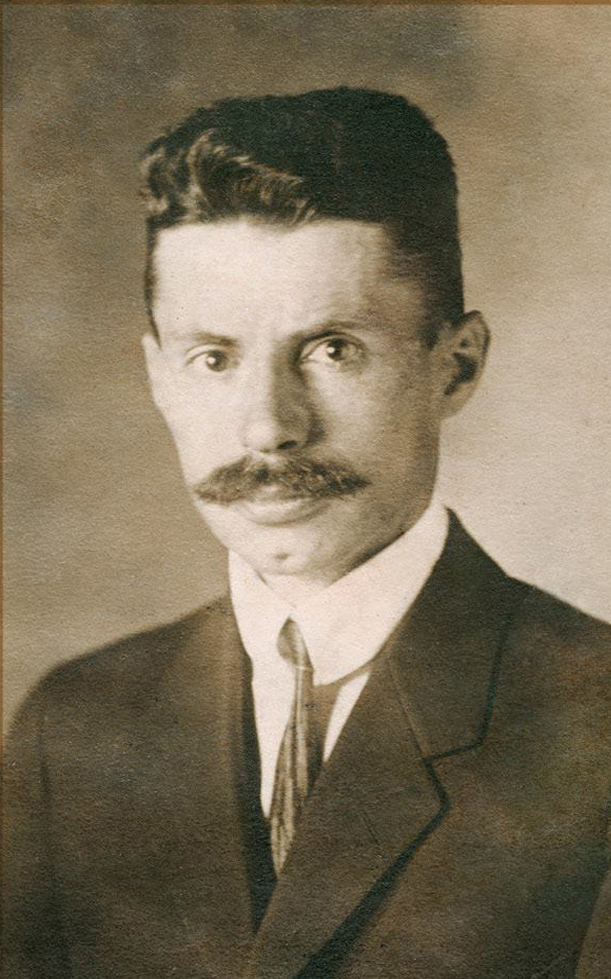
The purpose of this article is to examine the fundamental principles and stages of the formation of Ukrainian conservatism on the eve of Pavlo Skoropadsky’s Hetmanate and in the aftermath of the defeat of the Ukrainian Revolution (1917–1921). The study analyses the development of Viacheslav Lypynskyi’s (1882–1931) theory of a Ukrainian hereditary classocratic monarchy, which aimed to achieve national consolidation and affirm national-historical traditions within the structures of state and political power. His vision of a national elite, territorial patriotism, religious tolerance, and the classocratic structuring of society, combined with the project of personifying Hetman Pavlo Skoropadsky and his lineage, formed the foundation of the modern Ukrainian conservative movement.[3]
In the wave of social conflicts in Ukraine after February 1917, politically moderate figures were excluded from the state-building process. Without being a democrat, and above all a socialist, one had no chance of political success. “From the moment of the revolution, all conscious Ukrainians declared themselves socialists, and those who had the courage not to count themselves among the socialists remained outside political life”, wrote the Ukrainian historian and contemporary of those events, Dmytro Doroshenko. “It seemed inconceivable to imagine a Ukrainian patriot who was not a socialist”.[4] These words referred to the abovementioned Viacheslav Lypynskyi, one of the most prominent Ukrainian historians and political thinkers of the time. Thanks to his work, the populist worldview was revised, depriving it of its dominant role in shaping the ideological foundations of the Ukrainian national movement.
Unlike the Ukrainian liberal-populist and socialist figures who sought to build a future Ukraine without the descendants of the national nobility and the Cossack elite – excluding them from the civic movement – Lypynskyi turned to the traditional moral values created by these very groups. It was amidst these values, he argued, that
Shevchenko grew, revival grew, we ourselves grew. It was the old faith of the former Cossack starshina; it was the individual moral worth of the best people chosen from among the Cossack masses, in war and in labour.[5]
Lypynskyi called for nurturing the national tradition, the foundation of which lay in Christian spiritual values. He contrasted what at first glance might have seemed to be “obsolete” social terminology – monarchism, knighthood, aristocratism, and the like – with the revolutionary romanticism of democracy and socialism. In reality, however, by seeking historical parallels in Ukraine’s past, he aimed to modernize that past, turning it into an effective instrument for shaping a new national aristocracy – one capable of productive struggle for statehood.
Lypynskyi was interested in the national-political rather than the social aspects of Ukrainian identity (which distinguished him, for example, from Volodymyr Antonovych and other khlopomany). Though an ethnic Pole, he felt Ukrainian without breaking with his social milieu – without shame or renunciation of his ethnic identity; nor did he renounce his Catholic faith. To the outside world, he presented himself as a Ukrainian nobleman seeking support from his own social stratum, which connected him to the historical past.
In turn, the conservative-leaning Ukrainian nobility did not embrace the Ukrainian revolutionary movement, largely because of the social radicalism of the majority of its participants. For the most part, the nobility sought ways to preserve itself and to defend its socio-economic interests. Despite their political passivity, representatives of the Ukrainian Cossack-starshyna families did not lose their national instinct. It was within this milieu that the worldview of the future Hetman Pavlo Skoropadsky (1873–1945) was shaped. Skoropadsky was closely tied by kinship to numerous aristocratic families of the Hetmanate – Kochubei, Myloradovych, Myklashevskyi, Markovych, Tarnavskyi, Apostol, Zakrevskyi, and others. He observed,
Thanks to my grandfather and father, to family traditions, to Petro Yakovych Doroshenko, Vasyl Petrovych Horlenko, Novytskyi, and others, and despite my service in Petrograd, I was constantly engaged with the history of Little Russia. I always passionately loved Ukraine, not only as a land of fertile fields and a wonderful climate, but also for its glorious historical past, for its people, whose entire outlook differs from that of the Muscovites.[6]
It was precisely in these circles of the Ukrainian aristocracy of Left-
-Bank Ukraine that the hetman tradition lived on, giving impetus to the revival of the Hetmanate in 1918.
Among the political forces that supported Hetman Skoropadsky’s rise to power was the Ukrainian Democratic Agrarian Party (UDKhP), virtually the only political organization in Ukraine at that time to avoid any attachment to the socialist idea. The UDKhP was founded on 29 June 1917, during the Congress of Organized Farmers in Lubny. The gathering brought together some 1,500 peasant farmers and up to 20 landowners.[7] The principal foundations on which the party planned to build its activity were declared as follows: the sovereignty of the Ukrainian people; private property as the cornerstone of the national economy; the parcelling of purchased landed estates to meet the needs of smallholding peasants; and the retention by previous owners of the amount of land determined by the Ukrainian Sejm.[8]
In August 1917, Viacheslav Lypynskyi drafted the party programme on the basis of previously approved principles.[9] In the document published in October 1917, he expanded the political and economic content of the programmatic foundations of UDKhP’s work. New provisions included the need to form a leading stratum of society with a strong state-oriented consciousness; the coexistence of leasehold and private ownership forms of landholding; the establishment of state control over the national economy, and other measures.[10]
As Lypynskyi noted, the fact that UDKhP was an agrarian party meant it had to ensure that “the agrarian segment of Ukrainian democracy would take, in the process of shaping political life, a position corresponding to its size (85% of the entire population)”. He continued, “Ukraine is a land of farmers, and the Ukrainian state must become a state of farmers”.[11]
The first Ukrainian conservative party declared as its priority the interests of the largest social class – the farmers – and intended to “use every means to increase the political, economic, and cultural strength of the Ukrainian peasantry”.[12] Lypynskyi emphasized the concept of national sovereignty and the unity of Ukrainian lands. In the section ‘The International Position of Ukraine’, he advanced a slogan that had previously been voiced by only a handful of Ukrainian independence advocates. Among them was the legal expert and historian Serhiy Shelukhyn, who regarded 28 February 1917 – the date of Nicholas II’s abdication of the throne – as the date of Ukraine’s restored independence because it meant the automatic annulment of the oath of allegiance to the Tsar and the “return to us of the rights defined by the Pereyaslav Constitution of 1654, with its extension over the entire territory of the Ukrainian people within Russia”.[13]
Lypynskyi arrived at the same conclusion as Shelukhyn, arguing that with Nicholas II’s abdication Ukraine had acquired the legal grounds for independent statehood. Evidence of this can be found in the UDKhP’s program:
At the Ukrainian Constituent Assembly, we shall demand that our relations with the Russian people and its state be reconsidered and reestablished anew, since the Pereyaslav agreement of 1654, upon which our union with Russia had until now rested from a legal standpoint, ceased to have lawful force the moment the Romanov dynasty abdicated the Russian throne.[14]
The provisions recorded by Lypynskyi in UDKhP’s program demonstrated that the party was, in fact, one of the first political forces in Ukraine to openly declare the necessity of creating an independent Ukrainian state. He wrote,
Our history teaches us that our people lived a full national life only when they enjoyed the completeness of their sovereign rights upon their own land (the Kyivan State), or after the loss of statehood, when within the people there awoke, with elemental force, the striving to regain those lost rights [the Cossackdom].
Furthermore, Lypynskyi emphasized,
The Ukrainian national idea is capable of reviving the Ukrainian ethnographic mass only when it goes hand in hand with the idea of the sovereignty of the Ukrainian people; when it calls for complete national liberation, and in place of slavish service to foreign state organizations it sets forth the striving to create a state of our ow”.[15]
Lypynskyi also stated that the intensification of class struggle needed to be overcome, emphasizing that the Ukrainian people had the right to demand from political parties that they “for the sake of their party or class interests, not retreat even a single step from the principle of the free existence of the nation, and that each Ukrainian party draw its strength from the internal forces of its own people, not from ‘external protections’”.[16]
According to the party program, the UDKhP set as its goal the creation of a Ukrainian Democratic Republic,
[…] in which the supreme state authority in all internal and international matters shall belong, in the legislative sphere, to the Ukrainian Sejm in Kyiv, elected for four years by citizens aged 20 and above on the basis of equal, universal, and direct election, with secret ballot according to a proportional system; and in the executive sphere, to the General Secretariat [Council of Ministers], accountable to the Sejm.
Another provision of the UDKhP program defined:
The Ukrainian state is headed by a President, elected for four years, who holds the right of representation and performs legal and state functions to be established by the Ukrainian Constituent Assembly. For matters of great importance, a referendum shall be introduced, while legislative initiative shall also be permitted.[17]
Scholars have interpreted Lypynskyi’s formulation of the institution of the presidency – as elaborated in the UDKhP’s party program – in different ways. Some questioned whether he was a conservative and monarchist from the very beginning, or whether he just experienced periods that could be described as “democratic”.
For example, Fedir Turchenko and Natalia Zaliska conclude that “in circumstances when favourable conditions had arisen for the creation of a Ukrainian state but the masses were captivated by socialist slogans, Lypynskyi, for the sake of the idea of independence, compromised his monarchist views”.[18] In their view, the president, as envisioned by Lypynskyi, was to serve as the representative of the Ukrainian state and to carry out the functions assigned to him by the Constituent Assembly. Thus, the institution of the presidency embodied the link between the forced and the desired forms of Ukraine’s state structure.[19]
In our opinion, however, Lypynskyi never changed his public political position and remained a conservative and a monarchist throughout his life. As for the provision on the institution of the presidency that he introduced to UDKhP’s party program, this was nothing more than a tactical compromise which took into account the position of the overwhelming majority of the political class in Ukraine. Indeed, in his article “Dear Friends”, dated 8 November 1919, and addressed to his fellow party members, Lypynskyi commented on the key aspects of UDKhP’s activity in the following way:
In the early days of the revolution, paying tribute to ‘the spirit of the time’, and to our great regret, we had accepted – as you will recall, after long discussions on the handwritten draft of our party program that I had proposed, on the basis of compromise – ‘a republican form of government headed by a President’. This is how, finally, the corresponding provision in that program was edited, while the program itself was later printed with the changes made to it in line with our resolutions at the time.[20]
With the entry of Pavlo Skoropadsky into the political struggle and the establishment of the Ukrainian National Hromada, significant shifts took place within the Ukrainian conservative milieu. The Hromada was intended to unite “all property owners, regardless of their shades of affiliation, in the fight against destructive socialist slogans”. Contrary to the position of traditional Ukrainian political parties, Skoropadsky set himself the task of implementing a realistic programme of reforms, one free from demagogy and populism and directed toward securing a socio-economic system founded on private property as the very basis of culture and civilization.[21]
The liberal-democratic and socialist reforms in Ukraine, implemented by the Central Rada, provoked resistance from conservative political forces. These forces did not accept their policies, particularly in the areas of agrarian reform and state-building. The hotbeds of this opposition were landowners’ unions, which eventually consolidated into the All-Ukrainian Union of Landowners, as well as the Ukrainian Democratic Agrarian Party. The Hetman coup of 29 April 1918, in effect, opened the path for the development of an organized Ukrainian conservatism.
The Ukrainian Hetmanate State arose under unfavourable geopolitical and domestic circumstances. By signing the Treaty of Brest-Litovsk and inviting German and Austro-Hungarian troops to defend the UNR, the leaders of the Ukrainian Central Rada failed to recognize that the state was obliged to fulfil its commitments to its allies. On the contrary, the leaders of Ukrainian socialist parties were preparing for a mass peasant uprising, hoping in this way to force the Germans to withdraw their troops from Ukraine.
Assuming both responsibility and power, Pavlo Skoropadsky strove to secure from the Germans the greatest possible degree of neutrality and laid down his own conditions, which corresponded to the interests of the Ukrainian State. In his memoirs, he wrote:
Remember that had it not been for my intervention, a few weeks later the Germans would have established an ordinary general-governorship in Ukraine. It would have been based on the general principles of occupation and, of course, would have had nothing in common with the Ukrainian national idea. Consequently, there would not have been a Ukrainian state that truly appeared on the world stage, even if only during this brief period of the Hetmanate. This means that the idea of Ukrainian statehood, in the eyes of both foreigners and our own people, would have still seemed utopian. From the time of the 1918 Hetmanate, Ukrainian statehood became a fact, one with which the world already reckoned and will have to continue to reckon.[22]
Skoropadsky was well acquainted with the practice of state governance. He was convinced that Ukraine’s independence could be secured against all destructive forces only if a combat-ready, permanent, and regular army was created, as well as a state-administrative apparatus; if diplomatic relations were established with as many countries as possible; if the economy and transportation were rebuilt; if the financial system was strengthened; and if the state provided material support for the functioning of institutions of education, science, and culture. The Hetman positioned himself as an uncompromising opponent of Bolshevism. This was one of the significant distinctions between him and the leaders of the Ukrainian socialist parties.
Naturally, the proclamation of the Hetmanate was only the beginning of the state-political practice of Ukrainian conservatism, which still had to undergo a long path of ideological and organizational refinement. This was well understood by the Hetman and his associates. Significantly, Skoropadsky emphasized that “the Hetmanate proved to be the first shift toward a more moderate course, more natural and thereby more enduring”.[23]
At that time, Ukrainian conservatism possessed neither the necessary organizational strength nor a clearly defined ideology. The transformations initiated by Skoropadsky were not purely conservative; to a large extent, they were supplemented by liberal reforms. Therefore, Ukrainian conservatism in 1918 can be qualified as liberal: rather than opposing social change in general, it opposed the radical social experiments of Bolshevism and the Ukrainian socialists of the Central Rada.[24]
The activation of right-wing forces during this period and the search for conservative-statist models were characteristic of the socio-political environment of many ethnic groups. In this context, the Ukrainian conservative project does not appear exceptional. For instance, within the political calculations of the Polish elite, the creation of a Polish monarchy was a central idea, to be achieved by incorporating into Galicia the Polish ethnic territories that had been under Russian rule. Among the many contenders for a possible Polish throne, the most likely candidate turned out to be Archduke Karl Stefan Habsburg, a cousin of Emperor Karl I and the father of Wilhelm Habsburg (also known as Vasyl Vyshyvanyi). The figure of Karl Stefan Habsburg was particularly attractive to Polish conservatives due to his family ties with the Czartoryski and Radziwiłł dynasties.
The intention to implement conservative-monarchical concepts was characteristic of many other ethnic groups that were forming their own states out of the ruins of former empires. The Finnish envoy to the Ukrainian State, Herman Gummerus, recalled that in his country.
[T]heyhey moved forward, with typical Finnish stubbornness, in the direction they had set out for earlier on. We needed a German king, even the brother-in-law of Emperor Wilhelm, despite the fact that the foundations of the Hohenzollern throne were already shaking.[25]
On 12 Apri 1918, in Riga, the creation of the Baltic Duchy in union with Prussia was proclaimed. It was headed by Heinrich Hohenzollern, the brother of the German Emperor, Wilhelm II. On 4 July 1918, the Council of Lithuania (Lietuvos Taryba) adopted a decision to establish a monarchy in Lithuania and to invite Prince Wilhelm of Württemberg to the royal throne under the name Mindaugas II.[26]
As a statesman, Viacheslav Lypynskyi did not seek political confrontation either during the time of the Ukrainian Central Rada or under the Directory of UNR. He criticized the Ukrainian national authorities only when their actions harmed the consolidation of political forces, leading to a policy of self-destruction.
The inconsistent political steps of the Directory and its repressions against the state-minded activists ultimately compelled him to resign from his post as Ukrainian envoy in Vienna. The final impetus for this step was the execution of the talented military commander Petro Bolbochan, who had dared to oppose the political course of the Supreme Commander of the UNR Army, Symon Petliura.
In an extended letter to the Minister of Foreign Affairs of the UNR, Andriy Livytskyi, dated 16 October 1919, Lypynskyi wrote that the basis for his
loyal attitude toward the new Government was the firm hope that this Government, taught by the bitter experience of the unfortunate class policy of the last days of the Central Rada, would not repeat its old mistakes. Nor would it repeat the mistakes of those Ukrainian right-wing and moderate circles who, having created the Hetmanate, nevertheless failed to find a path to understanding the left-wing Ukrainian circles, and thus failed to rise to a truly national ideology and to create that inter-class national cement without which the building of our state is absolutely impossible.[27]
In fact, Lypynskyi equally reproached both Ukrainian socialists and the Ukrainian right circles who had supported Hetman Pavlo Skoropadsky for their failure to reach political compromise and unite their efforts towards the common goal of building an independent state. Despite the fact that the Directory, in such a dramatic moment, dared to destroy its own Ukrainian State through an uprising, he still hoped that it might become “not a narrowly class-based” but a truly national institution. Filled with this hope, he tried to persuade his fellow Hetmanites that they were mistaken in abandoning Ukrainian political work.
Lypynskyi continued his efforts, resisting
the temptation to withdraw completely from the – ultimately quite understandable –chaos that had by then taken hold of our foreign policy, destroying what Ukrainian statehood had already managed to secure abroad in the time of the Hetmanate.[28]
He further noted that, despite the dire situation in which the UNR found itself, the republican leadership
still less than the former Hetman government (where at least attempts were made), managed to summon within itself that moral effort that would have enabled it to unite around itself all strata and classes of Ukraine for the defence of its Homeland.
According to Lypynskyi, the UNR leaders followed “the path of narrow class partisanship and irresponsible demagogy”. They failed to “lead the people behind them, as befitted a National Government and the intelligentsia that stood behind it in such critical times, but instead allowed themselves to be led by a dark mass, long demoralized by servitude”. He described the very fact of the execution of Colonel Petro Bolbochan as “merely the higher more visible flame of the process of self-immolation that destroyed our house”.[29]
Lypynskyi wrote these lines in late 1919, when the Ukrainian republican leadership had in fact already lost control of Ukrainian territory. His open letter to the Minister of Foreign Affairs of the UNR, Andriy Livytskyi, dated 16 October 1919, was the first opinion piece in which Lypynskyi directly accused the Ukrainian democratic forces of being incapable of reaching a compromise, both within their own political camp and with their opponents. He provided a comparative analysis of other newly established European states that arose after the collapse of the Austro-Hungarian and Russian Empires (Czechoslovakia, Poland, Lithuania, Latvia, etc.), where democratic leaders “in times of national peril put aside all class, party, and internal disagreements”.[30]
At the same time, this letter may be regarded as the first warning to the republican leadership in which Lypynskyi, with great concern, foresaw the worst possible prospects for Ukraine’s future. In his view, the fragmentation of Ukrainian society – coupled with the unchecked dominance of monopolistic “parties” within the state – threatened to cause not only political disaster but also national-cultural catastrophe. He cautioned the Ukrainian leadership against the temptation to sacrifice – for the sake of private, class, or other momentary political interests – the common national ideal of freedom and the solidarity of the nation in defending that freedom.
In early November 1919, Lypynskyi entered a new stage of his political activity. First, he addressed his fellow party members in the UDKhP with the article ‘Dear Friends’, dated 8 November 1919. The article, in effect, became a prelude to his political treatise Letters to Our Brothers-Farmers. In it, Lypynskyi maintained that because of persecution and intolerance by the UNR authorities toward the UDKhP, the party had no chance of convening its own congress. For this reason, he was compelled to address his fellow party members with this letter, reaffirming the party’s existence as well as its moral and ideological unity.[31]
One of the very first questions Lypynskyi sought to answer was why the Ukrainian nation had been defeated in its struggle for liberation in the twentieth century – a struggle which, as he stressed, “will long continue under the banner of mass social movements directed toward a clearly defined goal – that is, movements deeply thought out, theoretically well-grounded, and organizationally well-prepared”. Lypynskyi was convinced that any activity lacking these features – that is, profound theoretical and organizational foundations – would, despite its patriotism and activism, ultimately fall into tragic dependence on better-organized foreign political forces. He pointed out that sectarian squabbles and mutual intolerance among political parties had led Ukrainian society to a dead end.[32]
Instead of a detailed party program, he proposed precisely defined main goals of political struggle since, in his view, Ukrainian society was facing not a battle of party programmes, but a long and stubborn struggle over fundamental principles: for the Ukrainian State or against it, and over the foundations upon which such a state should be built. He then emphasized the need to regroup political forces by not parties but political unions or blocs, whose primary principle would be to “think of the Ukrainian national life in no other terms than in the form of its own Ukrainian State”.[33]
In his essay ‘The Tragedy of the Ukrainian Sancho Panza: Impressions from an Emigrant’s Notebook’, Lypynskyi used an allegorical form to depict the relationship between the leading social stratum, personified by Don Quixote, and the people, Sancho Panza, while analysing the interplay between realism and idealism in Ukrainian and European public life. Concurrently, he summed up the consequences of the leading stratum’s behaviour during the era of the nation’s liberation struggles.
Comparing the positions of Western European and domestic elites, Lypynskyi observed that in Europe, Don Quixote, that is, the leading class (aristocracy), while preserving its “traditional ancestral faith, chivalric tradition”, culture, and the experience of past generations, strove to hand down this “treasure” to Sancho Panza – the new generations of pragmatists born from within the various strata of European society. According to Lypynskyi, without Don Quixote “the existence of a modern European nation would be inconceivable”.
Lypynskyi then noted that when the European, undemocratic, nationally-oriented Don Quixotes won the trust of the “primitive Sancho Panzas, and the latter began sacrificing their lives for the idea of their nation, the European nations arose. These nations are complex spiritual human collectives that evade comprehension by these new Sancho Panzas, with their very pragmatic methods”.[34]
By contrast, in Ukraine – where, in Lypynskyi’s view, the Ukrainian elite had lost its national spirituality – “only the corporeal Don Quixotes remained: Don Quixotes who lost faith in themselves, in their culture, in their vocation”. Without Ukrainian faith and Ukrainian culture, the Ukrainian elite – “our Don Quixotes” – converted to foreign religions, became foreigners, sacrificed their lives for Poland, and built up the might and power of the Great Russian Empire”.
Lypynskyi believed that the national revival in Ukraine found the Ukrainian Don Quixotes – who had transformed into “penitent nobles and clerics’ sons” – unprepared. Instead of preserving their social essence and providing “guidance and tutelage” to the rest of society, they begged forgiveness from Sancho Panza, the peasantry, for being part of the “bad gentry stock”, whose “ancestors had always wronged Sancho Panza”, and so forth.
Lypynskyi’s usage of allegory was directed against that group of the Ukrainian elite who, instead of becoming a firm support for the people and serving as leaders, shifted onto the people an “unbearable task” of seeking its own independent path. Yet, without national idealism, whose bearer was the stratum representing the national tradition, Lypynskyi saw no possibility of restoring statehood:
Without its Don Quixote, without faith in the nation, without faith in the national idea, it was time for our Sancho Panza – for the nation – to speak its word. In that terrible hour, when not a minute could be lost, Sancho Panza, together with the penitent nobleman and the humble cleric’s son, took the road he had already travelled.
Lypynskyi railed against the inconsistency of Ukrainian democracy: its autonomism, its “flirtations” with Russian democratic circles, and its appeals to the people “for advice”. He observed,
All this once again led nowhere. It ended where it began, with Sancho Panza throwing the worthless Don Quixote out the door and going off to look for faith from his ragged neighbours, for he no longer had one of his own, for Don Quixote had not given him faith.[35]
Lypynskyi was convinced that the Ukrainian aristocracy’s loss of its social identity and its transition into the ranks of so-called democracy ultimately led to a national tragedy. Deprived of leadership capable of instilling in society at large – and in the peasantry, represented by Sancho Panza – the idealistic “Don Quixotian” striving for its own national state, the Ukrainian peasantry did not follow the feeble, pragmatic Ukrainian Don Quixote, the democrat. Instead, it found itself in the embrace of Don Quixote, a foreign Muscovite.
Concurrent with this dramatic period of Ukrainian history, when society seemed to be gripped by “democratic” chaos and social disintegration, Lypynskyi also discerned some constructive elements of development. These were linked to the fact that
for a moment, the old Ukrainian Don Quixote of the Hetmanate was revived on the western frontiers of Ukraine, where the cult of the penitent nobleman and the idealized tramp had not taken hold. Therefore, the Ukrainian Don Quixote created the Galician Army.
In his view, these were the only constructive moments in the era of Ukrainian national-liberation struggles, when the Ukrainian Sancho Panza felt pride in his Don Quixote,
but Don Quixote lacked strength, and the tragedy of Sancho Panza unveiled again… and in righteous indignation, Sancho Panza grumbled with all his fury at his Don Quixote that he was weak, that he had failed to lead him.
This tragedy, Lypynskyi argued, would continue until the time when, instead of a Ukrainian democrat – “a boorish, vagrant, self-spitting Ukrainian intellectual from the ranks of penitent nobles and humble clerics’ sons” – there appeared a Don Quixote with “unshakable faith in himself, in his old weapon, in his old tradition, and in his old culture”.[36]
Thus, in the revival of Ukrainian conservative forces (in both Eastern and Western Ukraine), which had succeeded in restoring the national form of statehood (the Hetmanate) and in creating a regular Ukrainian Galician Army, Lypynskyi saw a real path to overcoming national disintegration. Only the political and spiritual activation of national conservatism and the transfer of Ukrainian leadership into its hands could bring the peasantry, “our Sancho Panza”, back onto the path of national-state consciousness, putting an end to the peasantry’s terrible tragedy.
Lypynskyi then concluded that the Ukrainian Don Quixote must shed his democratic garb and return to his essence, restoring faith in himself and in the national-state promises embedded within him.
In the aforementioned letters, notes, and journalistic writings, Viacheslav Lypynskyi identified the main reasons for the defeat of the Ukrainian revolution of 1917–1921, criticizing particular aspects of Ukrainian democracy. Furthermore, in his Letters to Our Brothers-Farmers: On the Idea and Organization of Ukrainian Monarchism, he focused on these questions systematically. According to Ivan Lysiak-Rudnytsky, this work became “a unique phenomenon” within modern Ukrainian social thought, containing “both an exposition of his [V. Lypynskyi’s] philosophy and his practical political program”.[37] Given that a large part of his treatise was devoted to comparing three political systems – the Central Rada, the Hetmanate, and the Directory – one might posit that they form the basis for his analysis of various forms of state organization, namely classocracy, ochlocracy, and democracy.
Lypynskyi concluded that the socio-political order of the future Ukrainian state must be pluralistic. He also opposed any restrictions on social strata or political currents in the process of state-building. In his view, Ukraine must possess a differentiated class structure encompassing all the social strata necessary for the existence of a mature nation and an independent state. All of social strata were to become co-participants in the creation of the new elite, one “recruited from the best people” representing the various classes of society.
Addressing his “brothers-farmers” – that is, representatives of the Polonized and Russified Ukrainian gentry – Lypynskyi emphasized that only through cooperation with the people and through mutual influence during this cooperation could both the “lords” and the people rid themselves of their shortcomings. Indeed, Ukraine could be created only by the joint efforts and collaboration of these social groups. Otherwise, both groups were doomed to mutual destruction: “Vile slaves [would] periodically slaughter their vile lords; in their turn, vile lords [would] sell their lordly honour to one or the other metropolis and once again, with its help, place a muzzle on the rebellious slaves”.[38]
Appealing to the intelligentsia, Lypynskyi maintained that democracy and the people were not synonyms since “the people were, are, and always will be, and the future always belongs to them”. However, the people never govern directly; they only bring forth a national elite from their own midst. Furthermore, the people fare best when their elected representatives are guided by “the loyalty, honour, intellect, and organizational experience of mature leaders”.
At the same time, Lypynskyi was unwilling to put up with the intelligentsia’s claims to supreme political power, as was the case in 1917. Instead of giving “its nation a single unifying political ideology”, the intelligentsia produced “a parasitic splitting of the nation into a multitude of parties and ideologies that kept devouring each other”.[39]
With regard to the material foundations and the way the Ukrainian democratic intelligentsia lived and worked, Lypynskyi pointed out that this group supplied the main cadres for the nationally oriented Ukrainian movement before the Revolution of 1917. He drew attention to the fact that the representatives of the intelligentsia “belonged to all sorts of the so-called free Russian professions” and “absolutely could not imagine themselves in the role of builders of a Ukrainian state”.
Therefore, in his view, “the idea of their own state, built by some other Ukrainian classes, was to them if not contentious, then at best entirely alien”. Instead, they sought
to exploit exclusively for themselves the only role for which, by their very nature, they felt capable – the role of intermediaries between the Russian state and the Ukrainian popular masses, whose first manifestations of national consciousness they strove to take under control with all their might.[40]
This, in turn, determined the fact that the Ukrainian socialists strove by all means possible to continue performing the mediating role, clinging to the remaining “fantasies” of the old Russian state. Lypynskyi demonstrates that the independence of the Ukrainian socialist parties that dominated the Ukrainian Central Rada did not emerge as an organic fact of their political evolution, but arose literally within a few days, and they themselves ridiculed this independence as “bourgeois chatter”.
Lypynskyi then pointed out that the Ukrainian socialist parties proclaimed independence not because “they suddenly felt the irresistible desire of the masses to have their own state, but simply because the new Bolshevik Russia no longer wished to speak with them as the representatives of the Ukrainian nation”. In his words, “suddenly there was no one in front of whom they could mediate”, and it was precisely “the Russian Bolsheviks, and not the Ukrainian national idea” that forced the leadership of Ukraine to embark on the path of national independence and state-building.[41]
Lypynskyi underlined that “when it comes to its internal policy, the entire first period of the Central Rada’s activity passed under the slogan of struggle against the independentists (samostiynyky) in general, and the non-socialist independentists in particular”.[42] Characteristically, his position was shared by his opponent, Mykhailo Hrushevsky:
Only after a prolonged and serious period of hesitation did the main Ukrainian parties – the Socialist Revolutionaries and the Social Democrats – decide to proclaim the independence of Ukraine, and even then [it was done in such a manner that] all suspicions or hopes of the independence of Ukraine being a form of Ukrainian reaction or Ukrainian national exclusivity would be deemed irrelevant.[43]
According to Lypynskyi, this last phrase means that
at a certain point, the Ukrainian socialist parties decided to monopolize the idea of independence exclusively for themselves, simply driving out all long-standing independentists as ‘reactionaries and hetmanate’, beyond the boundaries of the Ukrainian nation (which was to become a free and independent nation of social revolutionaries upon the day of the proclamation of the Fourth Universal). In doing so, they would exchange autonomy for independence.[44]
Lypynskyi underscored that non-socialist independentists, having joined state building process during Skoropadsky’s Hetmanate and having started to implement these intentions, encountered determined resistance from the Ukrainian socialists and democrats. Referring to Hrushevsky, Lypynskyi reiterated that for the Ukrainian democrats of that time, the idea of restoring the Hetmanate, reviving the Cossack army and Ukrainian national aristocracy, establishing a strong Ukrainian authority, and expanding the Ukrainian state was regarded as a threat to “freedom and democracy”.[45]
In a letter to Maksym Gechter, a Ukrainian publicist of Jewish origin, Lypynskyi noted,
I have never imagined the possibility of the existence of a Ukrainian Nation without its own Ukrainian State, and herein lies the fundamental psychological difference between myself and the Ukrainian democrac”.[46]
Nevertheless, throughout Lypynskyi’s twenty years of political activity, he constantly heard insinuations from Ukrainian socialists that “independence was a bourgeois invention, and that only my [Lypynskyi’s] ‘bourgeois origin’ explains my political ‘independence position’”. Furthermore, in emigration they reproached Lypynskyi and his like-minded supporters, saying that they had never been and could never be independentists since “independentism is exclusively a socialist trait”.[47]
Advancing his thesis on the principles of nation-building, Lypynskyi stated that “nations were shaped by victories or by misfortunes shared by all members of a national collective on a psychological level”. By contrast, he argued, Ukrainians “defeated themselves” because “the leaders of the nation failed to create a concept, a faith in, a legend of a single, unifying, free, and independent Ukraine for all Ukrainians”, and therefore “did not fight for it. [As a result], such a Ukraine could not come into being, could not take on a real, living form”.
As a consequence of this struggle, there appeared “a new national ruin with its old division into various external orientations, with a hopeless and inescapable strife between the formerly poor and the formerly wealthy within it”.[48]
Lypynskyi stressed that the “honeymoon period” of Ukrainian democracy was the era of the Ukrainian Central Rada, when it (democracy) was “just by itself, the only one, without ‘Bolsheviks’ and without ‘Hetmanites’”. This period, however, quickly passed, and in emigration the representatives of this democracy “managed to squabble with each other” and once again split into left- and right-wing party factions. He then asked: Whom and what do such parties actually represent? Can we assume that
all these democratic, more or less socialist parties are representatives of some organic economic and political class interests, or are they merely temporary unions of democratic intelligentsia formed with one purpose – to ‘benefit from being in power’ under any possible circumstance?
Lypynskyi reinforced his assumption while analysing the political tactics of the aforementioned parties toward the principal figure of Ukrainian democracy at the time, the Head of the Directory of the UNR, Symon Petliura:
When he rose up against the Ukrainian government and ‘overthrew the Hetman’, all, as one man, were with him and around him. But as soon as he himself became the government, immediately the ‘parties’ – without any real reason grounded in political or national ideology – began turning against him.
Lypynskyi then inquired why Ukrainian democrats had abandoned Petliura and, for the most part, left for abroad, “when his policy was absolutely the logical one, pursued from the beginning of the revolution by the entire Ukrainian democracy?”
He concluded that, having risen up against Hetman Skoropadsky, the all-national Ukrainian authority, Ukrainian democracy failed to create another model of national power independent of foreign forces, and instead “had now produced two Ukrainian democratic and socialist independences, one of them dependent on Piłsudski’s power, and the other on Rakovskyi’s”.[49]
Ukrainian democratic forces used the same logic when opposing Skoropadsky, who, according to Lypynskyi, provided “the maximum” of what “the Ukrainian nation could obtain at that time”. They boycotted their own state. For this, in Lypynskyi’s view, Ukrainian democracy bears “responsibility before history, in no lesser degree than those who then headed the Ukrainian state”.[50]
Lypynskyi further pointed out that the proclamation of the 1918 Hetmanate paved the way for the stable existence of the Ukrainian State. In 1918, Ukrainian conservatism, represented primarily by landowners of various kinds, was already implementing its programmatic principles in alliance with the liberal bourgeoisie. Cooperation between Ukrainian conservatives and local progressive elements was supposed to contribute to the “rejuvenation” of the former, as well as to the rebirth of the nation and its own state:
The 1918 Hetmanate was, in fact, a heroic attempt to rejuvenate and strengthen local conservatism. It was meant to create a single local territorial state authority, common both to conservatives and to progressives [postupovtsi], and to re-establish, together with such an authority, normal relations between the followers of conservatism and progress in Ukraine.[51]
The study of the national and state traditions of the Hetmanate led Lypynskyi to the conclusion that it was precisely the hereditary “ancestral” monarchy (favoured by Bohdan Khmelnytskyi at the end of his life) that was regarded as the most successful form of state organization in Ukraine.
The choice of Skoropadsky as a likely candidate for heading the Hetmanate was one of the decisive components in developing the idea of a Ukrainian monarchy. Drawing largely on the practical experience of the Hetmanate of 1918, Lypynskyi elaborated on the theory of a hereditary monarchy in Ukraine and defined the role and functions of the head of the hetman lineage. The head of supreme authority in the state had to be completely independent of external, non-Ukrainian factors. The majesty of the Ukrainian nation was to become equally dear to all Ukrainians, to be kept above party intrigues and devoid of influence by various politicians. Thus, the institution of the Hetmanate was to stand above all classes and parties, belonging to no political current. The chief guarantor of stability in the state had to be the legitimate Hetmanate: hereditary rather than elective.
Moreover, Lypynskyi regarded the Hetmanate as a monarchical point of support, one that was constant, rooted in historical tradition and historical continuity, and capable of “creating the foundation upon which and within which every one of our leaders and patriots will be able to manifest his creative reformist activity”.[52]
In his view, only the Skoropadsky lineage could provide a genuine monarchical personification of the Hetmanate, being the only one “to have maintained itself to the present day at the appropriate level; to it alone did God grant sufficient courage and strength in 1918 to revive our state tradition and its own ancestral Hetman tradition”.[53]
In his letter to Andriy Bilopolskyi, dated 9 December 1921, Lypynskyi explained his reasoning behind the choice of Pavlo Skoropadsky for the role of future hetman:
Only the Father [Hetman Pavlo Skoropadsky], who holds the mandate of the agrarian class granted to him on the territory of Ukraine, has the legitimate right to play the role of personification. This legitimacy is highly important for eradicating the most terrible Ukrainian malady – otamanshchyna – within our milieu.[54]
Concurrently, by formulating the theoretical foundations of the monarchical power in Ukraine, Lypynskyi sought to develop the relationship between the personifier of the lineage and the political organization. In his conception, the nonpartisan Hetmanate organization – the Ukrainian Union of Landowners-Statesmen (USKhD) – was supposed to unite around Skoropadsky all those who desired the revival of Ukraine:
We want them to stand up, one and all, to back up the Hetman and his Lineage as the only genuine living Symbol of Ukraine. Only finding support within itself, only securing a stable Ukrainian centre that is being passed on from father to son, will provide a backbone to the Ukrainian idea – the nucleus of the Ukrainian nation.[55]
As for Eastern Galicia, Lypynskyi observed that the government of the Western Ukrainian People's Republic – the dictatorial government of Yevhen Petrushevych – differed fundamentally “from all our illegal and usurping otaman-led administrative units since it arose on a completely different soil than ours – the Galician soil, which possessed stronger conservative elements and therefore more easily withstood even democratic disorganization”.[56] Nevertheless, in Lypynskyi’s view, even for Galicia, a government representing the democratic and republican method of state-building would, in the end, prove harmful and destructive.
With his concept of personifying the hetman lineage as a symbol of the purity of the monarchical movement, Lypynskyi sought to ensure the unity of the future state. Elaborating on his position, as well as that of his like-minded colleagues, he wrote:
For us, the decisive factor for introducing personification in emigration was the moment of legitimacy. We hoped to eliminate the danger of a struggle among claimants by personifying the Hetmanate in advance, on the condition that the representative of this lineage would symbolize an idea, like all of us. At the same, he won’t be a former hetman exploiting this idea for self-restoration.[57]
In creating the concept of the Hetmanate movement, Lypynskyi laid down the principle of balancing state institutions. In his view, the Hetmanate was to be limited by a political body, the Council of Jurors, and by an executive body, the Hetmanate Administration. As a result, the institution of Hetmanate was to perform consolidating and representative functions within Ukrainian society.
Lypynskyi believed that the Hetman was a rather symbolic figure in the state, merely representing the Hetmanate movement rather than being its actual political leader. At the same time, he hoped that a strong Hetmanate organization of an “order-like type”, which he envisioned the USKhD to be, would be able to control the Hetman’s actions and guide his steps – under his own ideological and political leadership – thereby strengthening his outward moral and political authority.
By the mid-1920s, Skoropadsky had become a symbol of the Ukrainian monarchical idea. The majority of Ukrainian monarchists perceived him as the sole possible candidate for the hetman of a future hereditary Ukrainian labour monarchy. Thus, Lypynskyi succeeded in resolving the most important issue that emerged for the founders of the USKhD, which concerned both the ideological and political foundations and the organization of the Ukrainian monarchical movement: the question of dynasty.
In addressing this matter, Lypynskyi was convinced that electing a new hetman in emigration as the head of the Ukrainian monarchical state was not expedient since such a state still had to be established. In the meantime, until a return to Ukraine became possible, it was necessary to personify the idea of the Ukrainian labour monarchy in a figure who would symbolize the purity of that same idea and of the unity of the monarchical organization.
As an ideologist of Ukrainian conservatism, Viacheslav Lypynskyi inaugurated a new trend in Ukrainian socio-political thought after the defeat of the Ukrainian revolution of 1917–1921. His theoretical conception of the future development of the Ukrainian state gained wide resonance during the interwar period among Ukrainian émigré circles in Western Europe, Canada, the United States, and later in Latin America and the Western Ukrainian lands.
Lypynskyi’s ideology of Ukrainian conservatism was inextricably linked to the experience of Skoropadsky’s Hetmanate in 1918 and was based on the following principles:
Social pluralism: Ukraine must develop a differentiated class structure encompassing all strata necessary for the existence of a mature nation and an independent state.
Revival of the national aristocracy: this was supposed to link the “old” and the “new” Ukraine, introducing an element of stability into national life.
Political pluralism: the necessity of opposition capable of counterbalancing the Hetman’s authority and preventing inertia in the state apparatus.
Territorial patriotism: all inhabitants of Ukraine are its citizens, regardless of their ethnic origin, confession, social status, or national-cultural consciousness.
Religious pluralism: equality of all confessions and the impossibility of identifying nationality with any particular denomination.
BIBLIOGRAPHY
Bojko, Olena, ‘Utvorennja jedynoho nacionalʹnoho frontu ukrajinsʹkymy polityčnymy sylamy u 1918 r.’, Ukrajinsʹkyj istoryčnyj žurnal, 6 (1997), 14–23
Hruševsʹkyj, Mychajlo, ‘Rokovyny ukrajinsʹkoji nezaležnosti’, in Tvory: u 50 tomach, ed. by Pavlo Sochanʹ and others, 50 vols (Lʹviv: Svit, 2002–?), IV (2007), bk. 2, pp. 257–59
Lypynsʹkyj, V’jačeslav, ‘Dorohi druzi’, in V’jačeslav Lypynsʹkyj ta joho doba, ed. by Jurij Tereščenko, 5 vols (Kyjiv: Tempora, 2010–2017), pp. 25–28
Lypynsʹkyj, V’jačeslav, ‘Lysty do brativ-chliborobiv: Pro ideju i orhanizaciju ukrajinsʹkoho monarchizmu (vstup i perša častyna)’, V’jačeslav Lypynsʹkyj ta joho doba, ed. by Jurij Tereščenko, 5 vols (Kyjiv: Tempora, 2010–2017), pp. 92–214
Lypynsʹkyj, V’jačeslav, ‘Materialy do prohramy [Ukrajinsʹkoji demokratyčnoji chliborobsʹkoji partiji]. Peredmova. Narys prohramy ukrajinsʹkoji demokratyčnoji chliborobsʹkoji partiji’, in V’jačeslav Lypynsʹkyj. Іstoryko-politolohična spadščyna i sučasna Ukrajina, ed. by Jaroslav Pelensʹkyj (Kyjiv–Filadelʹfija, 1994), pp. 253–66
Lypynsʹkyj, V’jačeslav, ‘Trahedija ukrajinsʹkoho Sančo Pančo (Іz zapyskoji knyžky emihranta)’, V’jačeslav Lypynsʹkyj ta joho doba, I, ed. by Jurij Tereščenko, 5 vols (Kyjiv: Tempora, 2010–2017), pp. 29–37
Lypynsʹkyj, V’jačeslav, ‘Vstupne slovo’, in Zbirnyk Chliborobsʹkoji Ukrajiny (Praha, 1931), I, pp. 3–13
Lypynsʹkyj, Vjačeslav, ‘Lystuvannja’, Povne zibrannja tvoriv, archiv, studiji, Archiv, ed. by Roman Zalucʹkyj and Chrystyna Pelensʹka, (Kyjiv–Filadelʹfija, 2003), I, pp. 290‒91
Lypynsʹkyj, V’jačeslav, ‘Lysty do brativ-chliborobiv (rozdil ІV)’, V’jačeslav Lypynsʹkyj ta joho doba, ed. by Jurij Tereščenko, 5 vols (Kyjiv: Tempora, 2010–2017), IV (2015), pp. 84–223
Lypynsʹkyj, V’jačeslav, Poklykannja «varjahiv», čy orhanizacija chliborobiv (Nʹju-Jork, 1954)
Lysjak-Rudnycʹkyj, Іvan, ‘Naprjamy ukrajinsʹkoji polityčnoji dumky’, Іstoryčni ese, 2 vols (Kyjiv: Osnovy, 1994), II, pp. 63–73
Lysjak-Rudnycʹkyj, Іvan. ‘Vjačeslav Lypynsʹkyj: deržavnyj dijač, istoryk ta polityčnyj myslytel’, Іstoryčni ese, 2 vols (Kyjiv: Osnovy, 1994), II, pp. 149–58
‘Lysty: 26 lypnja 1919 r.; 16 iovtnja 1919 r.’, in The Political and Social Ideas of Vjačeslav Lypyns‘kyj, ed. by Jaroslaw Pelenski (Cambridge, Massachusetts: Ukrainian Research Institute), Harvard Ukrainian Studies, vol. 9, no. 3–4, pp. 382–93
Ostaško, Tetjana, ‘Do 125-riččja vid dnja narodžennja V.K. Lypynsʹkoho: V’jačeslav Lypynsʹkyj: postatʹ na tli doby’, Ukrajinsʹkyj istoryčnyj žurnal, 2 (2007), 113–30
Ostaško, Tetjana, ‘Pavlo Skoropadsʹkyj – lider ukrajinsʹkoho hetʹmansʹkoho ruchu’, Ukrajinsʹkyj istoryčnyj žurnal, 4 (2008), 96–110
Ostaško, Tetjana, ‘Vilʹhelʹm Habsburg i V’jačeslav Lypynsʹkyj’, Problemy vyvčennja istoriji Ukrajinsʹkoji revoljuciji 1917–1921 rr., 17 (2022), 111–46
Ostaško, Tetjana, Ukrajina V’jačeslava Lypynsʹkoho (Kyjiv: Tempora, 2022)
Šeluchin, Serhij, Ukrajina – nazva našoji zemli z najdavnišych časiv (Užhorod, 1929)
Šemet, Serhij, ‘Do istoriji Ukrajinsʹkoji demokratyčno-chliborobsʹkoji partiji’, Chliborobsʹka Ukrajina, Zbirnyk 1 (Videnʹ, 1920), pp. 63–79
Skoropadsʹkyj, Pavlo, Spomyny: kinecʹ 1917 – hrudenʹ 1918 roku, ed. by Tetjana Ostaško and Jurij Tereščenko (Kyjiv: Tempora, 2019)
Tereščenko, Jurij, ‘Deržavnycʹkyj vymir Pavla Skoropadsʹkoho’, Pavlo Skoropadsʹkyj, Spomyny: kinecʹ 1917 – hrudenʹ 1918 roku, ed. by Jurij Tereščenko (Kyjiv: Tempora, 2010), pp. 11–94
Tereščenko, Jurij, ‘Hetʹmanat Pavla Skoropadsʹkoho jak projav konservatyvnoji revoljuciji’, Ukrajinsʹkyj istoryčnyj žurnal, 3 (2008), 19–37
Tereščenko, Jurij, ‘Ožyvlennja tradycij’, in Ave. Do 100-littja Hetʹmanatu Pavla Skoropadsʹkoho, ed. by Larysa Іvšyna (Kyjiv: Ukrajinsʹka pres-hrupa, 2018), pp. 19–25
Tereščenko, Jurij, ed., V’jačeslav Lypynsʹkyj ta joho doba, 5 vols (Kyjiv: Tempora, 2010–2017)
Turčenko, Fedir and Natalja Zalisʹka, ‘V’jačeslav Lypynsʹkyj – ideoloh Ukrajinsʹkoji demokratyčnoji chliborobsʹkoji partiji’, in V’jačeslav Lypynsʹkyj. Іstoryko-politolohična spadščyna i sučasna Ukrajina, ed. by Jaroslav Pelensʹkyj (Kyjiv–Filadelʹfija, 1994), pp. 171–80
Zabarevsʹkyj, Mychajlo [Dmytro Dorošenko], ‘V’jačeslav Lypynsʹkyj i joho dumky pro ukrajinsʹku naciju i deržavu’, in V’jačeslav Lypynsʹkyj ta joho doba, ed. by Jurij Tereščenko, 5 vols (Kyjiv: Tempora, 2010–2017), I (2010), pp. 382–430
[1] Olena Bojko, ‘Utvorennja jedynoho nacionalʹnoho frontu ukrajinsʹkymy polityčnymy sylamy u 1918 r.’, Ukrajinsʹkyj istoryčnyj žurnal, 6 (1997), 14–23 (p. 14).
[2] Іvan Lysjak-Rudnycʹkyj, ‘Naprjamy ukrajinsʹkoji polityčnoji dumky’, Іstoryčni ese, 2 vols (Kyjiv: Osnovy, 1994), II, pp. 63–73 (p. 73).
[3] The history of Ukrainian conservatism, the ideological foundations of Ukrainian monarchism, and the Ukrainian Hetmanate of 1918 have been examined in the author’s publications, see: Tetjana Ostaško, Ukrajina V’jačeslava Lypynsʹkoho (Kyjiv: Tempora, 2022); ead., ‘Vilʹhelʹm Habsburg i V’jačeslav Lypynsʹkyj’, Problemy vyvčennja istoriji Ukrajinsʹkoji revoljuciji 1917–1921 rr., 17 (2022), 111–46; ead., ‘Pavlo Skoropadsʹkyj – lider ukrajinsʹkoho hetʹmansʹkoho ruchu’, Ukrajinsʹkyj istoryčnyj žurnal, 4 (2008), 96–110; ead., ‘Do 125-riččja vid dnja narodžennja V.K. Lypynsʹkoho: V’jačeslav Lypynsʹkyj: postatʹ na tli doby’, Ukrajinsʹkyj istoryčnyj žurnal, 2 (2007), 113–30, ff.
[4] Mychajlo Zabarevsʹkyj [Dmytro Dorošenko], ‘V’jačeslav Lypynsʹkyj i joho dumky pro ukrajinsʹku naciju i deržavu’, in V’jačeslav Lypynsʹkyj ta joho doba, ed. by Jurij Tereščenko, 5 vols (Kyjiv: Tempora, 2010–2017), I (2010), pp. 382–430 (p. 393).
[5] V’jačeslav Lypynsʹkyj, ‘Lysty do brativ-chliborobiv: Pro ideju i orhanizaciju ukrajinsʹkoho monarchizmu (vstup i perša častyna)’, V’jačeslav Lypynsʹkyj ta joho doba, I, pp. 92–214 (p. 165).
[6] Jurij Tereščenko, ‘Deržavnycʹkyj vymir Pavla Skoropadsʹkoho’, in Pavlo Skoropadsʹkyj, Spomyny: kinecʹ 1917 – hrudenʹ 1918 roku, ed. by Jurij Tereščenko (Kyjiv: Tempora, 2010), pp. 11–94 (p. 40).
[7] Serhij Šemet, ‘Do istoriji Ukrajinsʹkoji demokratyčno-chliborobsʹkoji partiji’, Chliborobsʹka Ukrajina, Zbirnyk 1 (Videnʹ, 1920), pp. 63–79 (p. 63).
[8] Ibid.
[9] Fedir Turčenko and Natalja Zalisʹka, ‘V’jačeslav Lypynsʹkyj – ideoloh Ukrajinsʹkoji demokratyčnoji chliborobsʹkoji partiji’, in V’jačeslav Lypynsʹkyj. Іstoryko-politolohična spadščyna i sučasna Ukrajina, ed. by Jaroslav Pelensʹkyj (Kyjiv–Filadelʹfija, 1994), pp. 171–80 (p. 171).
[10] V’jačeslav Lypynsʹkyj, ‘Materialy do prohramy [Ukrajinsʹkoji demokratyčnoji chliborobsʹkoji partiji]. Peredmova. Narys prohramy ukrajinsʹkoji demokratyčnoji chliborobsʹkoji partiji’, in V’jačeslav Lypynsʹkyj. Іstoryko-politolohična spadščyna i sučasna Ukrajina, pp. 253–66.
[11] Ibid., p. 257.
[12] Ibid., p. 258.
[13] Serhij Šeluchin, Ukrajina – nazva našoji zemli z najdavnišych časiv (Užhorod, 1929), pp. 73–74.
[14] Lypynsʹkyj, ‘Materialy do prohramy’, p. 258.
[15] Ibid., p. 255.
[16] Ibid., p. 264.
[17] Ibid., p. 259–60.
[18] Turčenko, Zalisʹka, ‘V’jačeslav Lypynsʹkyj – ideoloh Ukrajinsʹkoji demokratyčnoji chliborobsʹkoji partiji’, p. 175.
[19] Ibid., p. 176.
[20] V’jačeslav Lypynsʹkyj, ‘Dorohi druzi’, in V’jačeslav Lypynsʹkyj ta joho doba, I, pp. 25–28 (p. 28).
[21] Tereščenko, ‘Deržavnycʹkyj vymir Pavla Skoropadsʹkoho’, p. 58.
[22] Pavlo Skoropadsʹkyj, Spomyny: kinecʹ 1917 – hrudenʹ 1918 roku, ed. by Tetjana Ostaško and Jurij Tereščenko (Kyjiv: Tempora, 2019), p. 151.
[23] Ibid., p. 271.
[24] Jurij Tereščenko, ‘Ožyvlennja tradycij’, in Ave. Do 100-littja Hetʹmanatu Pavla Skoropadsʹkoho, ed. by Larysa Іvšyna (Kyjiv: Ukrajinsʹka pres-hrupa, 2018), pp. 19–25 (p. 24).
[25] Quoted after: Jurij Tereščenko, ‘Hetʹmanat Pavla Skoropadsʹkoho jak projav konservatyvnoji revoljuciji’, Ukrajinsʹkyj istoryčnyj žurnal, 3 (2008), 19–37 (p. 24).
[26] Tereščenko, ‘Ožyvlennja tradycij’, pp. 23–24.
[27] ‘Lysty: 26 lypnja 1919 r.; 16 iovtnja 1919 r.’, in The Political and Social Ideas of Vjačeslav Lypyns‘kyj, ed. by Jaroslaw Pelenski (Cambridge, MA: Ukrainian Research Institute), Harvard Ukrainian Studies, vol. 9, no. 3–4, pp. 382–93 (p. 383).
[28] Ibid., p. 384.
[29] Ibid., pp. 384–85.
[30] Ibid.
[31] Lypynsʹkyj, ‘Dorohi druzi’, p. 25.
[32] Ibid., p. 26.
[33] Ibid.
[34] V’jačeslav Lypynsʹkyj, ‘Trahedija ukrajinsʹkoho Sančo Pančo (Іz zapyskoji knyžky emihranta)’, V’jačeslav Lypynsʹkyj ta joho doba, I, pp. 29–37 (p. 31).
[35] Ibid., p. 36.
[36] Ibid., p. 37.
[37] Іvan Lysjak-Rudnycʹkyj, ‘Vjačeslav Lypynsʹkyj: deržavnyj dijač, istoryk ta polityčnyj myslytel’, Іstoryčni ese, II, pp. 149–58 (p. 153).
[38] Lypynsʹkyj, ‘Lysty do brativ-chliborobiv’, p. 97.
[39] Ibid., p. 132.
[40] Ibid., p. 151.
[41] Ibid., p. 152.
[42] Ibid., p. 157.
[43] Mychajlo Hruševsʹkyj, ‘Rokovyny ukrajinsʹkoji nezaležnosti’, in Tvory: u 50 tomach, ed. by Pavlo Sochanʹ and others, 50 vols (Lʹviv: Svit, 2002–?), IV (2007), bk. 2, pp. 257–59 (p. 258).
[44] Lypynsʹkyj, ‘Lysty do brativ-chliborobiv’, p. 151.
[45] Ibid.
[46] Vjačeslav Lypynsʹkyj, ‘Lystuvannja’, Povne zibrannja tvoriv, archiv, studiji, Archiv, ed. by Roman Zalucʹkyj and Chrystyna Pelensʹka (Kyjiv–Filadelʹfija, 2003), I, pp. 290‒91.
[47] Lypynsʹkyj, ‘Lysty do brativ-chliborobiv’, p. 176.
[48] Ibid., p. 163.
[49] Ibid., p. 171.
[50] Ibid., p. 154.
[51] V’jačeslav Lypynsʹkyj, ‘Lysty do brativ-chliborobiv (rozdil ІV)’, V’jačeslav Lypynsʹkyj ta joho doba, IV (2015), pp. 84–223 (p. 144).
[52] V’jačeslav Lypynsʹkyj, Poklykannja «varjahiv», čy orhanizacija chliborobiv (Nʹju-Jork, 1954), p. 29.
[53] Ibid., p. 54.
[54] Lypynsʹkyj, ‘Lystuvannja’, p. 205.
[55] Lypynsʹkyj, ‘Lysty do brativ-chliborobiv’, p. 118.
[56] Lypynsʹkyj, Poklykannja «varjahiv», čy orhanizacija chliborobiv, p. 29.
[57] V’jačeslav Lypynsʹkyj, ‘Vstupne slovo’, in Zbirnyk Chliborobsʹkoji Ukrajiny (Praha, 1931), I, pp. 3–13 (p. 6).