

DOCUMENT № 1
Interrogation Protocol of Jerzy Matusiński 22 November 1939
INTERROGATION PROTOCOL
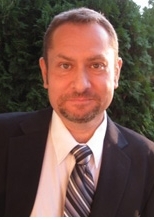
of MATUSIŃSKI, Jerzy Ignatyevich –
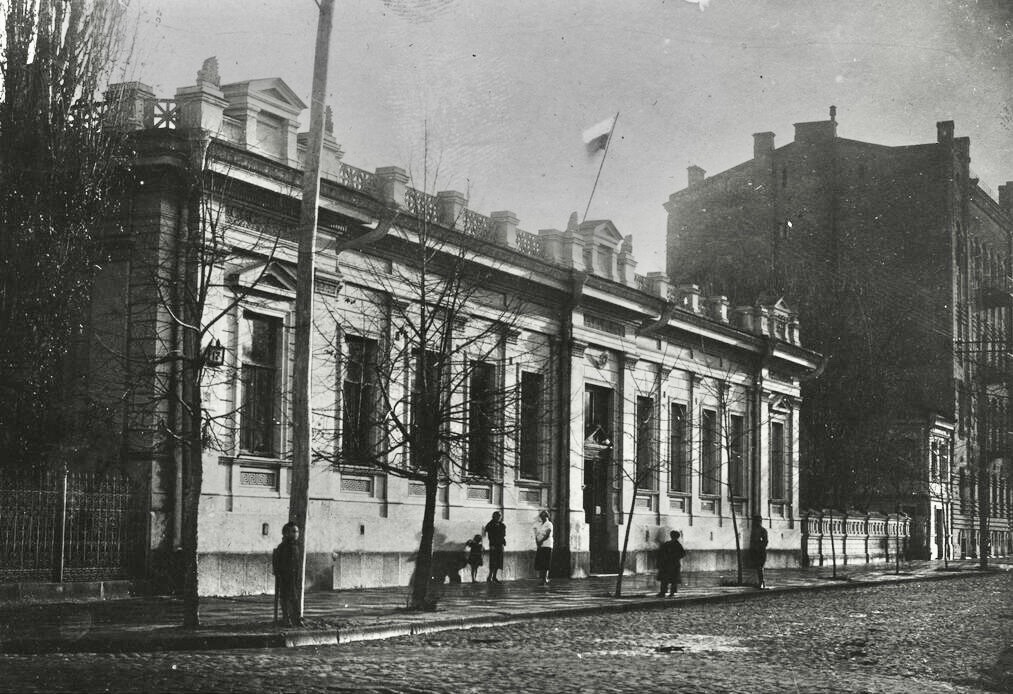
former Counsellor of the Polish Embassy in Moscow, Acting Head of the Polish General Consulate in Kyiv,
dated 22 November 1939
Question: At the interrogation of 13 Octobe 1939, you testified that prior to your departure from Warsaw to the Soviet Union to assume the position of Head of the Polish General Consulate in Kyiv, in late November 1937, you had a specially arranged meeting in the building of the Second Department of the Polish General Staff[1] with the following intelligence officers: Captain NIEZBRZYCKI,[2] Captain Urjasz, Rittmeister STPICZYŃSKI,[3] and the Head of the Soviet Section, Major BĄKIEWICZ.[4]
Describe in detail when and under what circumstances your subsequent meetings with officers of the Second Department of the Polish General Staff took place, and what issues were discussed during these meetings.
Answer: I indeed had subsequent meetings with officers of the Second Department of the Polish General Staff. There were three such meetings in total. All these meetings took place while I was in Warsaw on trips from Kyiv.
My first trip from Kyiv to Warsaw took place in the spring of 1938.
Shortly after my arrival, I telephoned the Second Department and spoke with NIEZBRZYCKI, telling him that I was in Warsaw and would like to meet with him. NIEZBRZYCKI asked me to stop by at 3 pm, so that afterward we could go to a restaurant and talk over lunch.
At 3 pm, I arrived at the Second Department to see NIEZBRZYCKI, and from there I went with him, STPICZYŃSKI, and URJASZ to the restaurant of the Bristol Hotel.
During lunch in a private room, NIEZBRZYCKI asked me to describe the situation and conditions of my work in Kyiv and, in the course of the conversation, posed a number of questions.
In particular, he was interested in the following: what might be the possible stance of the Soviet Union in the event of an armed conflict between Poland and Germany; whether it could be expected that the USSR would go to war with Germany; the standard of living and prices in Kyiv, and so forth.
NIEZBRZYCKI and his colleagues were especially interested in the methods of surveillance used by the NKVD in regards to the consulate.
They questioned me in detail about the following: at what distance secret agents follow our staff during surveillance; whether there is any difference in the system of surveillance applied to myself, other senior officials, and the junior personnel of the consulate; whether secret agents follow our employees into shops; how postal correspondence is delivered to the consulate, and so on.
I provided a detailed account of the methods of surveillance used in regards to the consulate and our staff to NIEZBRZYCKI, STPICZYŃSKI, and URJASZ. I also explained that upon leaving the building, all visitors to the consulate are detained in order to establish their identity and the nature of the conversations they had at the consulate.
The information I shared allowed me to conclude that the strict surveillance regime effectively excluded the possibility of establishing direct personal contacts with the local population in general, and in particular with the intent of carrying out intelligence work.
I urged NIEZBRZYCKI, STPICZYŃSKI, and URJASZ to establish a similar surveillance regime in Poland with regard to Soviet diplomatic representatives and their staff.
NIEZBRZYCKI replied that surveillance of Soviet diplomatic representatives and their staff in Poland was conducted in a more discreet manner; that such surveillance was not maintained over all employees simultaneously, but was instead carried out periodically, with respect to each person, for a designated period of time.
According to NIEZBRZYCKI, even if they were to decide to establish simultaneous and continuous surveillance over all employees of the Soviet diplomatic missions, this would be difficult to implement due to a shortage of personnel and vehicles.
Question: This is far from everything and does not in any way exhaust the range of specific questions discussed with you during this meeting by NIEZBRZYCKI and the other officers of the Second Department of the Polish General Staff.
You must understand that you will have to speak about the concrete intelligence work conducted by Poland against the Soviet Union, therefore you must name all Polish agents in the USSR known to you.
Speak plainly: In what manner were questions of practical intelligence work raised, and which agents were named to you by NIEZBRZYCKI, STPICZYŃSKI, and URJASZ?
Answer: I have decided to speak fully about everything known to me in this regard.
In the course of the conversation, NIEZBRZYCKI told me that, despite the difficulties encountered in work in Ukraine, much depended on the expertise of the operatives entrusted with intelligence assignments. In particular, he indicated that MICHAŁOWSKI,[5] during his time at the Consulate in Kharkiv, had succeeded in recruiting people, and that his successor, KAMINSKY, also worked effectively thereafter.
According to NIEZBRZYCKI, in cities and localities of Soviet Ukraine, situated along the Soviet-Polish border (where the main units of the Red Army had been stationed), there existed a Polish intelligence network, which was being gradually expanded through new recruitments. This network had been created during the period when conditions still allowed relatively free movement across the territory of the Ukrainian Soviet Socialist Republic (USSR), and when meetings with persons of interest could be held with lesser risk of exposure.
After the possibilities to maintain contact with the agent network by officers seconded to the consulate became particularly constrained, the Second Department switched to a system of maintaining contact with that network by sending special illegal couriers.
These couriers transmitted the relevant assignments to the agents and carried intelligence information received from the agents back to Poland.
The espionage data thus obtained was compiled in the Second Department and forwarded as guidance to the officers of the Second Department seconded to the Kyiv Consulate.
Couriers travelling from Poland to the Soviet Union were supplied with Soviet documents, clothing made in the USSR, Soviet currency, and weapons.
To create a dedicated stock of appropriate clothing for these purposes, dthe Second Department maintained a special depot at the Red Cross post in Zdolbuniv, where they specifically exchanged Soviet-made clothing for Polish clothing for persons in need, arriving in Poland from the Soviet Union.d
Give a briefing in Rivne.
NIEZBRZYCKI told me that an illegal courier constantly risked his life and that, if circumstances arose making arrest by the Soviet authorities inevitable, his only recourse was “to put a bullet through his own head”.
As I understood it at the time, an illegal courier did not conduct independent recruitment operations on Soviet territory; new people were recruited by agents already working there.
In response to my question to NIEZBRZYCKI about which circles the agent network was drawn from, he told me that, first and foremost, agents were selected and recruited from among Poles who wished to return to Poland, as well as from individuals hostile to the Soviet regime – in particular, Ukrainian and other nationalists, Trotskyists, and similar elements.
At that point, NIEZBRZYCKI named between twelve and fifteen agents with whom contact was maintained through the courier network. He said that information on the locations of these agents was kept at the Kyiv Consulate by their exponents (by which he meant officers seconded to the consulate), and that meetings with any of these agents (apart from the couriers) could take place only in extreme circumstances, and only with guarantees against exposure.
Of the agents named by NIEZBRZYCKI, I remembered only the following:
1. dZAWADZKI, a Pole, house owner residing in Anopol;
2. HNATYSHAK (male), a Ukrainian nationalist, employed in a minor clerical position at one of the Soviet institutions in Kamianets-Podilskyi;
3. KSIĘŻOPOLSKI, a Pole, residing and working (as either a civil servant or labourer) in Vinnytsia;
4. GOLDBERG (or GOLDMAN), a Jew, supposedly a Trotskyist residing in Berdychiv.
Question: Name all the remaining agents about whom NIEZBRZYCKI informed you.
Answer: Apart from those I have mentioned – ZAWADZKI, HNATYSHAK, KSIĘŻOPOLSKI, and GOLDBERG (or GOLDMAN) – Id do not recall NIEZBRZYCKI mentioning any other Polish agents who had worked in Soviet Ukraine. It is impossible for me to recall the names of the remaining agents.
Question: You will nevertheless have to name in full all agents known to you. Tell us now by what means (apart from couriers from Poland) you and other employees of the former Polish Consulate in Kyiv maintained communication with the Polish agents known to you from NIEZBRZYCKI.
Answer: Personally, I had no connection with that agent network. The means by which (apart from couriers) MAJEWSKI, MICHAJŁOWSKI, ZARĘBSKI,[6] ZDANOWICZ, and PIEŃKOWSKI maintained contact with the agents, I do not know, as they did not share that information with me.
Question: Your statement does not correspond to reality. You were aware of the methods and means of communication with the agents used by ZARĘBSKI and the other officers of the Second Department seconded to you. State everything you know about this.
Answer: I continue to maintain that I have no knowledge of this matter.
Question: Absolutely none?
Answer: ZARĘBSKI and other officers of the Second Department seconded to the consulate took occasional trips by car in various directions out of Kyiv.
They usually complained that they were under surveillance by the NKVD and that their routes were restricted by the authorities. Therefore, I do not know whether they were able, to any extent, to maintain contact with the agent network during these trips. I am unaware of any other means they might have used to sustain such contact.
Question: Continue your testimony regarding your meetings in Warsaw with officers of the Second Department of the Polish General Staff.
Answer: My next meeting with officers of the Second Department of the Polish General Staff took place while I was in Warsaw during my July 1938 trip from Kyiv.
I telephoned NIEZBRZYCKI at the Second Department and told him that I wished to invite him to breakfast with STPICZYŃSKI and URJASZ. As on the previous occasion, the meeting took place at the restaurant of the Bristol Hotel. NIEZBRZYCKI and STPICZYŃSKI came. URJASZ did not attend, as he was ill at that time.
During the conversation led by NIEZBRZYCKI, we discussed three main questions:
1. the Sudeten events and the possibility of the USSR taking military action to support Czechoslovakia;[7]
2. measures of Soviet counterintelligence with respect to the Polish Consulate in Kyiv;
3. the planned repressive countermeasures against the Soviet Plenipotentiary Office[8] in Warsaw and the Soviet Consulate in Lviv.
On the first question, I indicated that in Kyiv there were as of yet no signs that the USSR would actively intervene in Czechoslovak affairs.
On the second question, I informed NIEZBRZYCKI and STPICZYŃSKI that the strict surveillance regime established by Soviet counterintelligence over the Polish Consulate and its staff remained unchanged. In connection with this, the third question arose concerning retaliatory measures in Poland.
NIEZBRZYCKI told me that the issue of applying repressive measures to the Soviet diplomatic establishments and their staff in Warsaw and Lviv had been coordinated by the Second Department with BECK[9] and approved in the affirmative.
In particular, it was decided to detain all visitors to the Plenipotentiary Office and the Consulate; establish external surveillance over all employees of these institutions; prohibit shops from delivering food to the Plenipotentiary Office, the Consulate, and private residences; and so forth.
Question: You are omitting the fact that during this conversation with NIEZBRZYCKI and STPICZYŃSKI, the main point of discussion was the practical intelligence work in Soviet Ukraine. Describe this part of the conversation in detail.
Answer: NIEZBRZYCKI and STPICZYŃSKI stated that the primary intelligence task for the officers of the Second Department working in Kyiv was to determine whether, in connection with the Sudeten question, there was any concentration of Red Army forces on the Soviet-Polish border with a goal of delivering a strike against Poland and providing military assistance to Czechoslovakia.
The question then arose about intensifying intelligence activity in Soviet Ukraine. I do not remember how I reacted to this. I did not receive any practical instructions concerning intelligence work from NIEZBRZYCKI or STPICZYŃSKI.
Question: From whom, then, did you receive such instructions?
Answer: I received assignments to determine the movement of Soviet troops toward the Soviet-Polish border from the Polish Ambassador in Moscow, GRZYBOWSKI,[10] by cipher and by mail.
Question: How did you carry out these assignments?
Answer: I always informed one of the officers of the Second Department, seconded to me, on these assignments. He would usually travel together with SŁOWIKOWSKI[11] by rail to make direct observations of the military trains.
Question: To whom, how many times, and in what form did you report the results of these assignments?
Answer: The observations made by the officers of the Second Department were reported by me in the form of telegrams and reports to GRZYBOWSKI in Moscow, with copies to the Political Department No. 3 (P3) of the Ministry of Foreign Affairs (MID).[12] I sent such reports three times.
Question: When did you last meet with the officers of the Second Department of the Polish General Staff in Warsaw?
Answer: My last meeting with officers of the Second Department of the Polish General Staff took place during my trip from Kyiv to Warsaw in March 1939. As during my previous visits, I telephoned NIEZBRZYCKI at the Second Department, after which we met at the restaurant Simon i Stecki (near the Bristol Hotel). Together with NIEZBRZYCKI came STPICZYŃSKI, URJASZ, and another officer whom I didn’t know. The officer was wearing a military uniform of a captain and had recently returned from somewhere abroad.
The conversation revolved around the situation in Czechoslovakia, Soviet-Polish relations, and the conditions and circumstances of the work of the Kyiv Consulate.
I noted that despite signs of improvement in the relations between Poland and the Soviet Union, the surveillance regime over us in Kyiv had remained exactly as before.
Incidentally, in the course of the conversation I gave a negative assessment of the officer of the Second Department seconded to me, PIEŃKOWSKI, and expressed concern that, owing to his lack of restraint, some complications might later arise with the Soviet authorities.
Question: What did you mean by describing PIEŃKOWSKI as “lacking restraint”?
Answer: I told NIEZBRZYCKI and the other participants in the conversation that immediately upon his arrival in Kyiv, PIEŃKOWSKI had called his intelligence colleagues cowards, reproached them for “not being worth their salt”, and declared that he would show how one ought to work despite existing difficulties, by using bold and risky methods. I also reported that PIEŃKOWSKI had expressed his intention to curse at, strike, or otherwise insult the agents who were observing him.
NIEZBRZYCKI told me that PIEŃKOWSKI had been sent to Kyiv “on trial” and was expected to be recalled to Warsaw shortly.
However, PIEŃKOWSKI continued to work in Kyiv until the liquidation of the consulate.
The interrogation protocol has been recorded accurately from my words, read by me, and signed below: (signature)
INTERROGATED BY:
HEAD OF THE FIFTH SECTION OF THE THIRD DEPARTMENT GUGB NKVD OF THE USSR
CAPTAIN OF STATE SECURITY
(Rapoport)
[Seal]
Sectoral State Archive of the Security Service of Ukraine (Haluzevyj deržavnyj archiv Služby bezpeky Ukrajiny, hereafter SSA SBU), f. 16, op. 1, spr. 481, ark. 251–63.
[1] The Second Department of the General Staff of the Polish Army – the Polish military intelligence service – was active between 1918 and 1945.
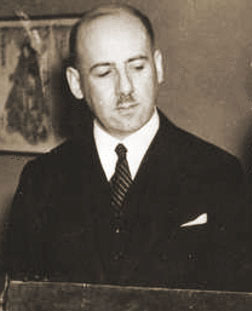
[2] Jerzy Antoni Niezbrzycki (1902–1968): Polish intelligence officer, Head of the “East” Section of the Second Department of the Polish General Staff (1932–1939). After 1939, he lived in exile, teaching at the British intelligence school and working at the Polish Ministry of Information and Documentation. Niezbrzycki published under the pseudonym “Ryszard Wraga” and specialized in Soviet Studies (Sovietology).
[3] Aleksander Stpiczyński (1898–1987): Polish intelligence officer, head of intelligence residencies in Kyiv and Bratislava, and officer of the “East” Section of the Second Department of the Polish General Staff. During the Second World War, he was assigned to the Command of the Union of Armed Struggle (Związek Walki Zbrojnej, or ZWZ) in France, and later in Warsaw, where he organized the “East” intelligence network and led the Eastern Section “WW-72” until 1942. Subsequently, he worked in the “666” group (a transfer and intelligence unit). In February 1943, he was arrested by the Germans but managed to escape and make his way across Europe to Great Britain. There, he completed the cichociemni (The Silent Unseen) special operations training course and, in September 1944, was parachuted into Poland. In November 1944, he was once again assigned to the Second Department of the Home Army (Armia Krajowa) Headquarters, but in December 1944 was re-arrested by the Germans and remained in concentration camps until the end of the war.
[4] Wincenty Adam Emil Bąkiewicz (1897–1974): Polish military officer, recipient of the Virtuti Militari Order.
He served in the Imperial Russian Army, later in the Polish Army (Wojsko Polskie), and in the Polish Armed Forces in the West. During the interwar period, he headed the Independent “Russia” Section of the Second Department of the General Staff. In 1939, he served as chief of the Second Department of the Armia Prusy Staff and was subsequently captured by the Soviets. After his release, Bąkiewicz headed the Second Department of the Polish Forces in the USSR. He later served as an officer of the Second Corps and Deputy Commander of the Second Carpathian Rifle Brigade. After the war, he lived in exile in London.
[5] Ludwik Michałowski (1900–1964): Polish intelligence officer, head of intelligence residencies in Kyiv and Prague. After 17 September 1939, he was captured by the Soviets but escaped. He was then captured by the Germans in November 1939. Following his release, Michałowski served in the Second Polish Corps, where he headed a Special (“S”) Section within the Information Department of the Corps Headquarters. After the war, he remained in the United Kingdom.
[6] Mieczysław Zygfryd Słowikowski, codename “Eugeniusz Zarębski” (1896–1989): Polish intelligence officer, head of the intelligence residency in Kyiv. He was arrested by the Soviets in 1939. Between 1941 and 1944, he directed the “Africa” intelligence network in Algeria, which played a crucial role in preparing the Allied landing in North Africa. After the war, Słowikowski remained in the United Kingdom.
[7] This refers to the first Sudeten crisis in May 1938, when the USSR declared its readiness to assist Czechoslovakia in accordance with the 1935 Treaty of Mutual Assistance, but only on the condition that France also fulfilled its allied obligations – which, however, did not take place.
[8] Prior to 1941, Soviet Plenipotentiary Office fulfilled the functions equivalent to an embassy.
[9] Józef Beck (1894–1944): Polish politician, diplomat, and military officer, a close associate of Józef Piłsudski. Beck served as Minister of Foreign Affairs of Poland from 1932 until the outbreak of the Second World War.
[10] Wacław Grzybowski (1887–1959): Polish psychologist and diplomat, doctor of psychology. He served as Polish envoy to Czechoslovakia (1927–1935) and ambassador to the USSR (July 1936 to 17 September 1939). Grzybowski refused to accept the Soviet note announcing the termination of treaties with Poland.
[11] Henryk Słowikowski (1910–1975): Polish diplomat and consular official. He served at the Polish Consulate in Kyiv in 1937–1939, where he was arrested by the NKVD. Later, he worked as an attaché and delegate of the Polish diplomatic service in the USSR and Baghdad. After Second World War, Słowikowski lived in Ottawa.
[12] P-3, USSR Ministry of Foreign Affairs: the Third Political Department of the Soviet MID, which in the 1930s–1940s was responsible for the analysis and coordination of foreign policy and intelligence information concerning the southern and eastern regions (including Turkey, Iran, and the Middle East), as well as bordering countries (such as Poland).